Obesity and Tuberculosis: An Emerging Lifestyle Health Concern- World Obesity Day – 4 March 2026 Dr. Rajendra Tatu Nanavare Pulmonologist & Chest Physician Mumbai
Published On: March 4, 2026
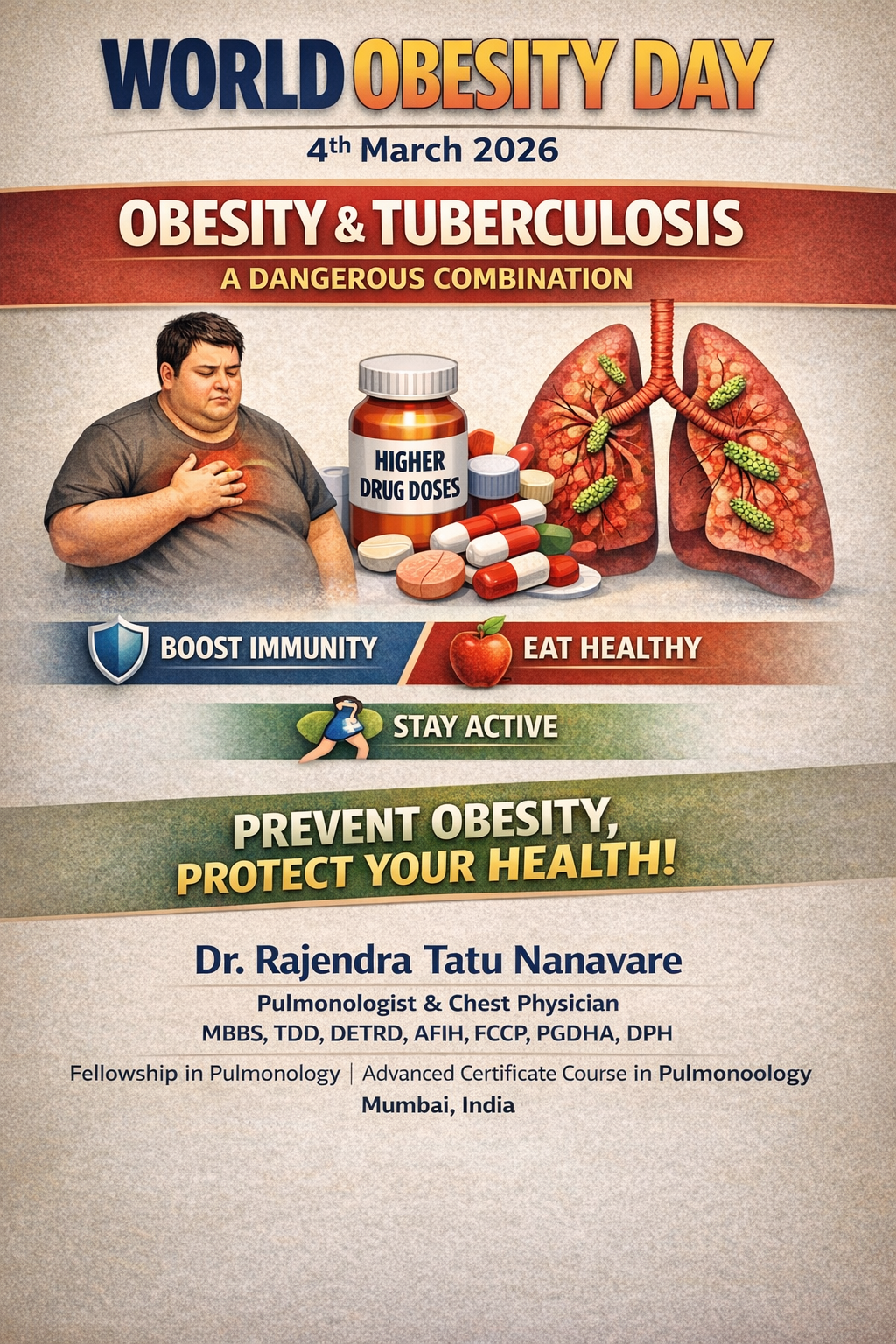
World Obesity Day – 4 March 2026
Obesity and Tuberculosis: An Emerging Lifestyle Health Concern
On the occasion of World Obesity Day (4th March 2026), medical experts are raising concern about the rapidly increasing burden of obesity and its complex relationship with infectious diseases such as Tuberculosis (TB).
According to Dr. Rajendra Tatu Nanavare, Pulmonologist and Chest Physician from Mumbai with more than 38 years of experience in Tuberculosis and respiratory diseases, the changing lifestyle patterns in urban India are leading to a significant rise in overweight and obese individuals. Sedentary lifestyle, high-calorie diets, lack of physical activity, stress, and poor sleep patterns have contributed to obesity becoming a major public health challenge.
Traditionally tuberculosis has been associated with malnutrition and underweight individuals, but recent clinical observations indicate that an increasing number of obese patients are also developing tuberculosis. This change reflects the complex interaction between metabolic disorders, immune dysfunction, and chronic infections.
Obesity alters the body’s immune response and is often associated with diabetes, fatty liver disease, hypertension, and metabolic syndrome, all of which can increase susceptibility to infections, including tuberculosis. Patients with obesity who develop TB often present additional clinical and therapeutic challenges.
One important concern is related to drug dosing during TB treatment. Anti-tuberculosis drugs are commonly prescribed according to body weight. In obese patients, this may require higher doses of medications, which can increase the risk of drug-related side effects, liver toxicity, and metabolic complications. Careful monitoring, proper dosing, and close medical supervision are therefore essential during treatment.
Dr. Nanavare explains that obesity should not merely be viewed as a cosmetic issue but rather as a chronic lifestyle disease with serious medical consequences. The combination of obesity with infectious diseases like tuberculosis highlights the need for a holistic approach to health that includes nutrition, physical activity, and preventive healthcare.
Public health experts emphasize the importance of adopting healthier lifestyles to prevent obesity and its complications. Simple steps such as regular exercise, balanced diet, avoiding processed foods, adequate sleep, stress control, and periodic health check-ups can significantly reduce the risk of obesity-related health problems.
Dr. Nanavare also stresses the need for greater awareness, early screening for metabolic disorders, and integration of lifestyle management with tuberculosis control programs. Addressing obesity is not only important for preventing non-communicable diseases but also for strengthening the body’s ability to fight infections.
On this World Obesity Day, the message is clear:
Healthy lifestyle is the strongest medicine. Prevention of obesity today will protect the health of future generations.
Dr. Rajendra Tatu Nanavare
Pulmonologist & Chest Physician
MBBS, TDD, DETRD, AFIH, FCCP, PGDHA, DPH
Fellowship in Pulmonology | Advanced Certificate in Pulmonology
Mumbai, India
Obesity and Tuberculosis: An Emerging Lifestyle Health Concern
On the occasion of World Obesity Day (4th March 2026), medical experts are raising concern about the rapidly increasing burden of obesity and its complex relationship with infectious diseases such as Tuberculosis (TB).
According to Dr. Rajendra Tatu Nanavare, Pulmonologist and Chest Physician from Mumbai with more than 38 years of experience in Tuberculosis and respiratory diseases, the changing lifestyle patterns in urban India are leading to a significant rise in overweight and obese individuals. Sedentary lifestyle, high-calorie diets, lack of physical activity, stress, and poor sleep patterns have contributed to obesity becoming a major public health challenge.
Traditionally tuberculosis has been associated with malnutrition and underweight individuals, but recent clinical observations indicate that an increasing number of obese patients are also developing tuberculosis. This change reflects the complex interaction between metabolic disorders, immune dysfunction, and chronic infections.
Obesity alters the body’s immune response and is often associated with diabetes, fatty liver disease, hypertension, and metabolic syndrome, all of which can increase susceptibility to infections, including tuberculosis. Patients with obesity who develop TB often present additional clinical and therapeutic challenges.
One important concern is related to drug dosing during TB treatment. Anti-tuberculosis drugs are commonly prescribed according to body weight. In obese patients, this may require higher doses of medications, which can increase the risk of drug-related side effects, liver toxicity, and metabolic complications. Careful monitoring, proper dosing, and close medical supervision are therefore essential during treatment.
Dr. Nanavare explains that obesity should not merely be viewed as a cosmetic issue but rather as a chronic lifestyle disease with serious medical consequences. The combination of obesity with infectious diseases like tuberculosis highlights the need for a holistic approach to health that includes nutrition, physical activity, and preventive healthcare.
Public health experts emphasize the importance of adopting healthier lifestyles to prevent obesity and its complications. Simple steps such as regular exercise, balanced diet, avoiding processed foods, adequate sleep, stress control, and periodic health check-ups can significantly reduce the risk of obesity-related health problems.
Dr. Nanavare also stresses the need for greater awareness, early screening for metabolic disorders, and integration of lifestyle management with tuberculosis control programs. Addressing obesity is not only important for preventing non-communicable diseases but also for strengthening the body’s ability to fight infections.
On this World Obesity Day, the message is clear:
Healthy lifestyle is the strongest medicine. Prevention of obesity today will protect the health of future generations.
Dr. Rajendra Tatu Nanavare
Pulmonologist & Chest Physician
MBBS, TDD, DETRD, AFIH, FCCP, PGDHA, DPH
Fellowship in Pulmonology | Advanced Certificate in Pulmonology
Mumbai, India
Latest Articles
-
स्थूलता आणि क्षयरोग : बदलत्या जीवनशैलीमुळे वाढणारे नवे आरोग्य आव्हान. जागतिक स्थूलता दिन – ४ मार्च २०२६ (World Obesity Day) डॉ. राजेंद्र तातू ननावरे श्वसन विकार तज्ज्ञ (Pulmonologist) व छाती रोग तज्ञ.
-
Obesity and Tuberculosis: An Emerging Lifestyle Health Concern- World Obesity Day – 4 March 2026 Dr. Rajendra Tatu Nanavare Pulmonologist & Chest Physician Mumbai
-

CME- Navkaar Hosp. Bhandup Mumbai 27th Feb 26.
-

CME at ACME Hospital, Chembur on Tuberculosis – Dr. Rajendra T. Nanavare
-
Lung Cancer in Never-Smoker Women: The Emerging Urban Indian Reality